Meet Your Functional Health Practitioner
Hi, I’m Tara!
(And former “I have every random symptom in the book” survivor.)
Honestly, I was probably one of the most skeptical people when it came to believing I could actually recover from my chronic symptoms. They had become so severe that I couldn’t imagine feeling healthy again.
The hardest part was that, from the outside, my life looked completely normal. I had a corporate job, I looked healthy on the outside, and was able to appear like a normal, functioning adult.
But behind closed doors, it was a completely different story.
Most days, all I could manage was dragging myself through the work day before coming home, collapsing on the couch, and crying myself to sleep. Every ounce of energy I had went towards managing my symptoms and simply making it through the day.
To everyone else I looked healthy and “normal”, but on the inside I felt like my body was collapsing. I was consumed by anxiety over my uncontrollable symptoms and constantly overwhelmed, wondering how I was going to get through each day—let alone imagine a future where I actually felt healthy again….
Just like you, I had tried EVERYTHING.
The fad diets, the online wellness trends, even some of the most ridiculous suggestions from unqualified yet very persuasive people.
I felt let down by my doctors and conventional approaches because my labs always came back “normal” and the only solution they offered me was a band-aid prescription to suppress my symptoms.
I saw every possible alternative doctor – I went to a homeopath, a naturopath, an acupuncturist, chiropractor, and functional medicine doctor, and while they all helped somewhat, I never felt like my issues were fully resolved.
I was even studying nutrition and doing everything ‘by the book’ diet-wise, but still not getting anywhere.
After almost a decade of suffering in silence and losing hope that there would ever be a way out, I decided to take things into my own hands and began researching obsessively about how to overcome these issues.
This led to my training as a Functional Health Practitioner
I learned what every other approach seemed to be missing when it came to helping me actually get lasting improvements
It was only through my persistence (some would say stubbornness) that I finally got the answers for myself.
It’s not that the other approaches weren’t helpful, but because most of my symptoms were not just simple issues, I needed a more complex approach that just wasn’t available through traditional practices.
Which is why I’ve become so obsessed with doing this work and taking on chronic cases like mine with women like you who’ve gone through similar things and are at their wits end.
If you can relate, I just want you to know that you’re not alone and it can and does get better.
My Credentials:
(backed by formal training in functional health, nutrition, and practitioner-level education)
01
M.A., Health Education w/ Nutrition Specialization
I earned a Master of Arts in Health Education with a focus on a holistic, whole-person approach to wellness that considers the interconnected roles of body, mind, lifestyle, environment, and community.
My training combined conventional and integrative health perspectives, including health coaching, behavior change, nutrition, stress management, and health promotion strategies that continue to shape my root-cause, client-centered approach to functional wellness.
02
Functional Diagnostic Nutrition® Practitioner (FDNP)
My Functional Diagnostic Nutrition (FDN) certification training provided me with advanced education in functional lab testing and a root-cause, systems-based approach to health, focused on identifying hidden stressors and imbalances within the hormone, immune, digestion, detoxification, energy, and nervous systems.
Through the FDN methodology and D.R.E.S.S. for Health Success® framework, I learned how to interpret functional lab data and create personalized wellness protocols that support the body’s innate ability to heal and restore balance naturally.
It doesn’t stop there.
I continue to pursue advanced training in niche areas
Including hormones, metabolism, digestive health, mineral balance, and functional lab interpretation because I know how complex (and deeply interconnected) chronic health issues can be.
Many of the clients I work with have spent years searching for answers to symptoms like bloating, fatigue, hormone imbalances, brain fog, and “normal” lab results, so it’s important to me to continually deepen my understanding of the body in order to better support clients with more complex, root-cause-driven cases.
Additional course work:
- FDN Advanced Hormone Course
- FDN Advanced SIBO Course
- FDN Advanced Thyroid Course
- KP HTMA Expert Course
- Holistic Health Experts OAT Simplified Course
Ready to work together?
Get Personalized Support
If you’re ready to get to the root cause of your symptoms and start taking practical steps toward healing that actually work, I offer two ways to work together. Explore the options below to find the best fit for you.
Frequently Asked Questions
I specialize in helping women in their 30s, 40s and 50s uncover the root causes behind their unrelenting chronic symptoms through a functional, whole-body approach. My work focuses on symptoms like IBS, constipation, food sensitivities, fatigue, brain fog, acne, PMS, irregular cycles, bloating, and burnout that are often dismissed as “normal” or unexplained by conventional testing.
Using functional lab testing and personalized nutrition, lifestyle, and supplement protocols, I help clients identify deeper imbalances such as (but not limited to): gut dysfunction, hormone imbalances, inflammation, candida overgrowth, parasites, mineral deficiencies, blood sugar dysregulation, nervous system stress, and detoxification issues — so they can finally understand why they feel the way they do and start healing at the root of metabolic malfunction.
My clients commonly experience significant improvements in digestion, energy levels, brain fog, skin health, hormone symptoms, mood, and overall quality of life after our work together addressing the true underlying imbalances contributing to their symptoms.
Many of the women I work with come to me after years of being told their labs are “normal” while still struggling daily with unexplained symptoms. They’ve often tried doing everything “right” — eating healthy, exercising consistently, and taking supplements like magnesium, probiotics, and multivitamins — yet their symptoms continue to persist and take over their lives.
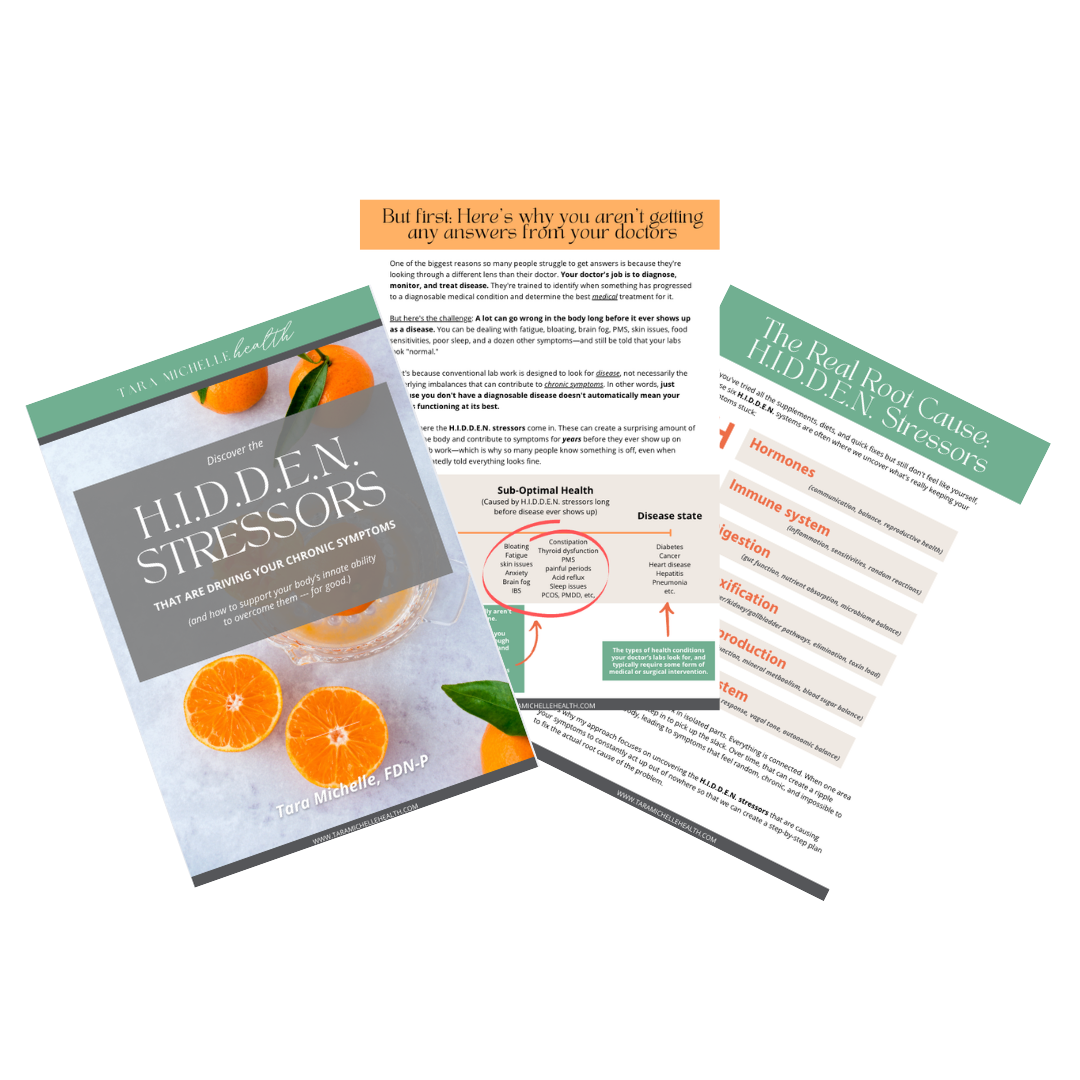
Through my signature approach to uncovering H.I.D.D.E.N. stressors — Hormone, Immune, Digestion, Detox, Energy Production, and Nervous System imbalances — and correcting those stressors through the D.R.E.S.S. approach to health success — Diet, Rest, Exercise, Stress Reduction, and Supplementation — clients often report:
- Reduced or eliminated bloating
- More regular bowel movements and improved digestion
- Increased energy and mental clarity
- Less painful periods and reduced PMS symptoms
- Improved cycle regularity
- Better moods and reduced anxiety
- Fewer food sensitivities and cravings
- Better sleep and stress resilience
- Improved skin and hormone balance
- Feeling more confident, empowered, and in control of their health again
While every person’s healing journey is unique, my goal is always to help clients create sustainable, long-term improvements — not just temporary symptom relief.
If you’ve been struggling with chronic digestive health symptoms, irritable bowel syndrome (IBS), bloating, fatigue, gut issues, or hormonal imbalances and feel like you’re stuck in a cycle of trial and error, functional nutrition offers you a clear path out.
You would benefit from functional nutrition if:
Conventional approaches haven’t provided you with lasting symptom relief.
You’re ready to figure out why your symptoms are happening and address the root causes.
You want a personalized plan tailored to your body’s needs, not a one-size-fits-all approach.
You’re seeking a partner in your gut health journey to guide and support you every step of the way.
Functional nutrition empowers you with the knowledge and tools to make meaningful changes, so you can feel confident, vibrant, and in control of your health again.
Functional nutrition takes a root-cause approach to address a wide range of symptoms and conditions, helping you reclaim your health from the inside out. If you’re struggling with any of the following, functional nutrition could be the answer you’ve been searching for:
Digestive issues: Bloating, constipation, diarrhea, acid reflux, irritable bowel syndrome (IBS), irritable bowel disease (IBD), and inflammatory bowel disease (Crohn’s disease and ulcerative colitis).
Skin concerns: Acne, rosacea, psoriasis, eczema, and other inflammatory skin conditions.
Hormonal imbalances: Adrenal fatigue, PMS, PCOS, irregular cycles, perimenopause symptoms, and mood swings.
Sleep issues: Difficulty falling asleep, staying asleep, or waking up feeling exhausted.
Autoimmune conditions: Including but not limited to Hashimoto’s thyroiditis, rheumatoid arthritis, lupus, and celiac disease.
Weight struggles: Unexplained weight gain, inability to lose weight, weight loss, or fluctuating weight despite diet and exercise.
Fatigue and energy problems: Chronic fatigue, mid-day energy crashes, or feeling “wired but tired.”
Food sensitivities and allergies: Symptoms like bloating, brain fog, joint pain, or skin flare-ups triggered by certain foods.
Mood and cognitive challenges: Anxiety, depression, brain fog, or trouble focusing.
Immune system dysfunction: Frequent colds, infections, or feeling “run down.”
The functional health approach is a personalized to uncover the root causes of these gut & hormone related issues, addressing them with targeted lifestyle, dietary, and supplement strategies tailored to your unique needs. No matter how complex or long-standing your symptoms, there’s hope for feeling better.
While both functional nutritionists and registered dietitians (RDs) are trained to support your health through nutrition, there are key differences in their approach and focus:
1. Root Cause vs. Symptom Management
Functional Nutritionist: Focuses on identifying and addressing the root cause of symptoms. This approach goes beyond diet to consider lifestyle, stress, gut health, hormones, and more, aiming for whole-body balance.
Registered Dietitian (RD): Often works within conventional healthcare settings, providing evidence-based dietary guidance for managing specific health conditions or meeting general nutritional needs.
2. Personalized vs. Prescriptive
Functional Nutritionist: Creates highly personalized plans based on an individual’s unique biochemistry, health history, and symptoms. Functional labs and detailed assessments are often used to guide recommendations.
Registered Dietician (RD): May use standardized dietary guidelines, such as the USDA’s MyPlate or the DASH diet, tailored to a person’s condition (e.g., diabetes or heart disease).
3. Scope of Focus
Functional Nutritionist: Takes a holistic approach, considering the interplay between diet, gut health, hormones, stress, sleep, and environmental factors to optimize overall health.
Registered Dietician (RD): Typically focuses on nutritional education, meal planning, and managing conditions like diabetes, high cholesterol, or malnutrition.
5. Tools and Strategies
Functional Nutritionist: May use functional lab testing (e.g., stool tests, hormone panels, or mineral tests) to uncover deeper imbalances and create targeted recommendations.
Registered Dietician (RD): Focuses on traditional diagnostic tools and dietary interventions approved by mainstream medical organizations.